Entrevista con Alexandra Kosteniuk por MIF Beatriz Marinello
January 30, 2009 by Support
Filed under En Español

Note: Interview written for the U.S. Chess Trust by Beatriz Marinello
Gran Maestra Alexandra Kosteniuk: Campeona Mundial, Mujer, Madre y Esposa … Aspirante a Modelo y un ejemplo para nuestra comunidad de ajedrez.
La Campeona Mundial Femenina Alexandra Kosteniuk vive parte del año en Miami, USA. y esta comprometida a promover el ajedrez en los Estados Unidos. Me gustaría darle las gracias por permitirme entrevistarla.
También nos gustaría aprovechar esta oportunidad para anunciar un evento que se efectuara en New York destinado a la recaudación de fondos para el US Chess Trust, la cual es una organización sin fines de lucro que provee recursos para ajedrez en USA.
Alexandra ha tenido la generosidad de ofrecer dar una simultánea de 20 tableros como apoyo al U.S. Chess Trust. Este evento se celebrará en la ciudad de Nueva York el 21 de marzo de 2009 en el British International School of New York.
Manténgase sintonizado para más detalles!
Entrevista con Alexandra Kosteniuk por MIF Beatriz Marinello
BEATRIZ: Hola Alexandra, es un placer tener la oportunidad de hacer esta entrevista contigo. Hace un poco más de cuatro meses, te haz convertido en la duodécima Campeona Mundial en la historia de ajedrez. ¿Qué se siente alcanzar ese logro? Estas haciendo historia, lo cual implica un gran responsabilidad. ¿Cómo todo esto ha afectado tu visión y forma de ver el futuro? ¿ Sientes la necesidad de devolver a la comunidad y cual quieres que sea tu legado, por así decirlo?

ALEXANDRA: La victoria en el Campeonato Mundial me hizo muy feliz y me sentí muy orgullosa. Definitivamente fue el momento más feliz en mi carrera ajedrecista. Pero, al mismo tiempo me ha costado tiempo asimilar que me había convertido en la Campeona del Mundo de ajedrez y con esto he entrado a los libros de historia. Pero luego poco a poco he entendido que la vida tiene que continuar, a pesar de que este era el objetivo de mi vida. Ahora tengo más objetivos y más motivación para el juego me amo tanto. Me siento muy fuerte ahora que tengo que hacer mucho más para promover y popularizar el ajedrez en el mundo y atraer a los medios de comunicación y el máximo numero de niños como sea posible a nuestro maravilloso juego.
BEATRIZ: Muchas veces después de conseguir un objetivo importante, sentimos un vacío ya que tenemos que replantear ciertas cosas. ¿cómo volverás a centrar tus objetivos como jugadora? ¿Haz tenido la oportunidad de reflexionar y determinar qué curso debes tomar?

ALEXANDRA: Después de ganar el Campeonato Mundial, he tenido un horario muy difícil, yo he estado jugando sin parar casi toda la segunda parte del 2008 y sólo ahora, después de establecernos en Miami tengo tiempo para descansar y pensar en mis planes y las metas para el futuro.
Sigo disfrutando jugar los torneos y sobre todo, el estudio del ajedrez con mis entrenadores, ya que no hay límite en los progresos en el ajedrez y me encanta estar en la constante búsqueda de la perfección que permite el ajedrez. También desarrollare una serie de eventos promocionales y dar charlas, simultáneas, entrevistas y también promovere el ajedrez como una educadora. Ademas, quiero pasar más tiempo con mi familia y especialmente con mi hija, estuve lejos de ella por mucho tiempo mientras me estaba preparando y jugando en el Campeonato del Mundo, ahora quiero compensar por el tiempo perdido.
BEATRIZ: ¿Cuáles son tus pensamientos sobre el futuro de la mujer en el ajedrez? ¿Cómo podríamos atraer más niñas al ajedrez?
ALEXANDRA: Más y más jóvenes están empezando a jugar al ajedrez. Creo que en la última década hemos visto un aumento constante en el número de niñas jugando ajedrez. Por eso es importante hablar no sólo sobre los hombres que son campeones, sino también acerca de las mujeres que juegan al ajedrez con éxito. Niñas que están empezando a jugar al ajedrez tienen que tener ejemplos o modelos femeninos con las cuales se pueden relacionarse con el fin de comprobar que también podrían algún día convertirse en campeonas.
BEATRIZ: A medida que llegas a un público más amplio y tienes mas fans, ¿Crees tu que al ser modelo, en cierto sentido se rompe la idea errónea de que la belleza y el cerebro no siempre son compatibles? ¿Crees que este mensaje tiene un impacto positivo en la promoción del ajedrez a un público mucho más amplio?

ALEXANDRA: El ajedrez es un juego muy antiguo y creo que merece mucha más atención de lo que tiene ahora. Lamentablemente, el mundo moderno está más interesado en “caras bonitas” que en los “valores intelectuales”. Hoy en día los ejemplos de los ninos provienen en su mayoría de las estrellas de cine y televisión, siguen sus vidas tratando de ser y verse como ellos. Actualmente, el ajedrez, injustamente en mi opinión, tiene una imagen de ser más bien aburrido lo que hace difícil atraer a los espectadores y a los medios de comunicación y, por lo tanto patrocinadores. Por eso siento que tengo que tratar de encontrar la manera de mostrarle al mundo que el ajedrez es un juego de buena onda, el cual es muy útil para los niños. Las niñas que juegan al ajedrez son como cuaquie otra niña y al mismo tiempo tendrán mejores posibilidades para triunfar en la vida.
BEATRIZ: Empezaste a jugar ajedrez a la edad de 5 años. Háblemos de su experiencia como una niña ajedrecista. ¿Hubieron acontecimientos concretos que condujeron su pasión por el ajedrez?

ALEXANDRA: Mi padre fue un héroe para mí. Yo valoraba mucho sus palabras y cuando el me dijo que iba a enseñarme cómo jugar al ajedrez Yo estaba muy emocionada y feliz de iniciar el estudio del ajedrez con él. Después de un tiempo el amor de mi padre por el ajedrez se traspaso a mí y a partir de ese momento empecé a estudiar ajedrez aún más asiduamente y con verdadera pasión.
BEATRIZ: Tu padre era un oficial del ejército que abandonó su carrera para apoyarte como una joven ajedrecista. Ahora, que eres madre, ¿cuáles son tus pensamientos acerca de la crianza de los jóvenes dotados de talentos especiales?

ALEXANDRA: En realidad, ahora entiendo el enorme trabajo de mis padres y todo lo que han hecho con el fin de educar a sus dos hijas. Ahora que soy madre pienso mucho en la educación de mi hija y lo que mas espero es que sea una niña feliz. Creo que cada niño es talentoso y lo más importante es ayudar a estos talentos a desarrollarse. La infancia, en mi opinión, es la etapa más importantes en la vida, así que trataremos de hacer lo mejor con la educación de mi hija. Es una tarea difícil, pero intentaremos los mejor de todo corazón.
BEATRIZ: ¿Cómo ha afectado la maternidad tu entrenamiento ajedrecistico? Todavía puedes mantener las cinco horas diarias de entrenamiento?
ALEXANDRA: Me sentí muy afortunada cuando mi esposo y mi mamá acordaron apoyarme plenamente, cuando les dije que quería prepararme para jugar en el Campeonato Mundial Femenino, el año pasado en Nalchik, cuando mi bebé ni siquiera tenia 1 año de edad. Tener un bebé cambia todo y fue muy difícil para mí volver a estar en forma y empezar de nuevo después de una pausa de cerca de un año. Ahora estoy muy feliz de que todos mis esfuerzos han sido recompensados. Sigo entrenando, pero en un horario diferente.

BEATRIZ: ¿Qué sientes que son los positivos y negativos de tener una vida en torno al ajedrez, como esto impacta a tu familia, me imagino que tienes un calendario muy agitado. Ha sido más difícil viajar teniendo en cuenta los cambios en tu vida? Tu familia es una parte de tu calendario de viajes?
ALEXANDRA: Cuando tienes un bebé es mucho más difícil viajar. Así que ahora tratamos de no viajar tan a menudo como estamos acostumbrados. Yo no soy tan flexible como lo era antes y la planificación de mi participación en futuros torneos y eventos es mas cuidadosa ya que tengo que considerar varios factores, para no estar lejos de mi bebé durante demasiado tiempo. Yo prefiero tener a mi bebé conmigo en los torneos regulares o con la mayoría de los eventos, por supuesto, ella se queda con mi esposo o mi mamá, si voy a torneos muy importantes como el Campeonato del Mundo.
BEATRIZ: La GM Yuhua Xu de China se convirtió en Campeona Mundial mientras ella estaba embarazada de cuatro meses, y tu te convertiste en Campeona Mundial con una niña pequeña. Parece más evidente que las mujeres lo podemos tener todo incluyendo una exitosa carrera en el ajedrez. Tu eres un gran ejemplo de ello. ¿Crees tu que biológicamente hablando, dado que el ajedrez es un deporte muy competitivo, los hombres tienen una ventaja sobre las mujeres?
ALEXANDRA: Técnicamente, creo que los hombres y las mujeres son iguales intelectualmente. La mayor fuerza física de los hombres les da una ventaja adicional en los controles de tiempo mas largos o partidas mas lentas. En los juegos de ajedrez rápido la diferencia es menor, como lo he demostrado jugando al Blitz con muchos Grandes Maestros. Además, el ajedrez exige una gran cantidad de estudios, y los hombres tienen mejores condiciones para más fácilmente dedicar tiempo al estudio del ajedrez, sin pensar en nada más, mientras que las mujeres tienen muchas más responsabilidades, como cuidar de la casa y establecer una familia. He leído recientemente un estudio, en el que se afirma que los resultados relativamente más bajos de las mujeres se deben principalmente a que no son muchas las niñas juegan al ajedrez. Si tuviéramos un número igual de niños y niñas que comenzaron a jugar al ajedrez y continuaran hasta sus 20 años, la diferencia en los niveles sería casi insignificante.

BEATRIZ: ¿Cuáles son sus metas para el futuro? Haz planificación pasar más tiempo en los Estados Unidos? Tienes planes de escribir más libros?
ALEXANDRA: Mi primer objetivo es devolverle al ajedrez todo lo que pueda, ya que es el ajedrez que me ha dado todo lo que tengo. Voy a promover el ajedrez en todo el mundo, y voy a hacerlo tanto en mi academia en linea como con mis DVD’s, y otras actividades. Estoy en camino de convertirme en un residente permanente de USA y vivir permanentemente en mi casa de Miami. Siento que el estado de la Florida es el mejor lugar para que mi hija crezca y para mí tener mi base acá.
BEATRIZ: En Rusia el ajedrez se enseña como parte del currículo escolar. Personalmente, creo que el futuro del ajedrez radica en la integración de ajedrez como parte de nuestra cultura, la mejor manera de abordar esto es a través de ajedrez en las escuelas. ¿Cuáles son tus comentarios y reflexiones sobre el ajedrez en las escuelas? ¿Tienes previsto la enseñanza del ajedrez a tus propios hijos a una edad temprana?
ALEXANDRA: Tienes toda la razón, el ajedrez en las escuelas es la mejor manera de hacer crecer el ajedrez. El valor educativo del ajedrez es totalmente claro, ayuda a los niños a triunfar en la vida. Definitivamente voy a enseñar a mi hija a jugar al ajedrez, todavía ni siquiera dos años, y ella ya sabe lo que son los peones, así como los caballeros, las piezas de ajedrez son sus juguetes favoritos, ve a su madre jugando con ellas todo el día, por lo que debe ser muy divertido! Estoy esperando con interés cuando tenga 3 o 4 años para que pueda empezar a mostrarle la belleza de nuestro maravilloso juego.
BEATRIZ: Eso es maravilloso. Es genial ver una joven mujer inteligente con una perspectiva de la vida que no muchos tienen y todo el amor que sientes por el ajedrez-! : -)
Bueno, Alexandra, vamos a finalizar esta entrevista .. ha sido un gran placer hablar contigo. Gracias por tomarte el tiempo para esta entrevista. Espero verlos pronto y les deseo lo mejor a ti y tu familia.
Para obtener más información acerca de la Campeona del Mundo Alexandra Kosteniuk – Por favor, visite la página web de Alexandra.
- Sitio web: www.Kosteniuk.com
- Su podcast: www.ChessisCool.com
- Video Podcast en www.ChessKillerTips.com
- También puede encontrar más información sobre sus videos de YouTube en www.youtube.com/chessqueen
Visite la página web de el U.S. Chess Trust para mas informacion – www.USChessTrust.org.
Alexandra Kosteniuk Interview by WIM Beatriz Marinello

Note: Interview written for the U.S. Chess Trust by Beatriz Marinello
Grandmaster Alexandra Kosteniuk: Woman World Champion, Mother and Wife…Aspiring Fashion Model and a Role Model for our chess community.
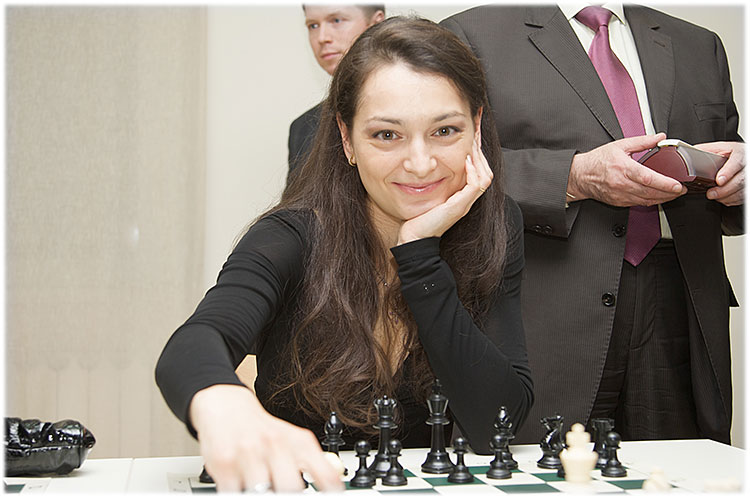
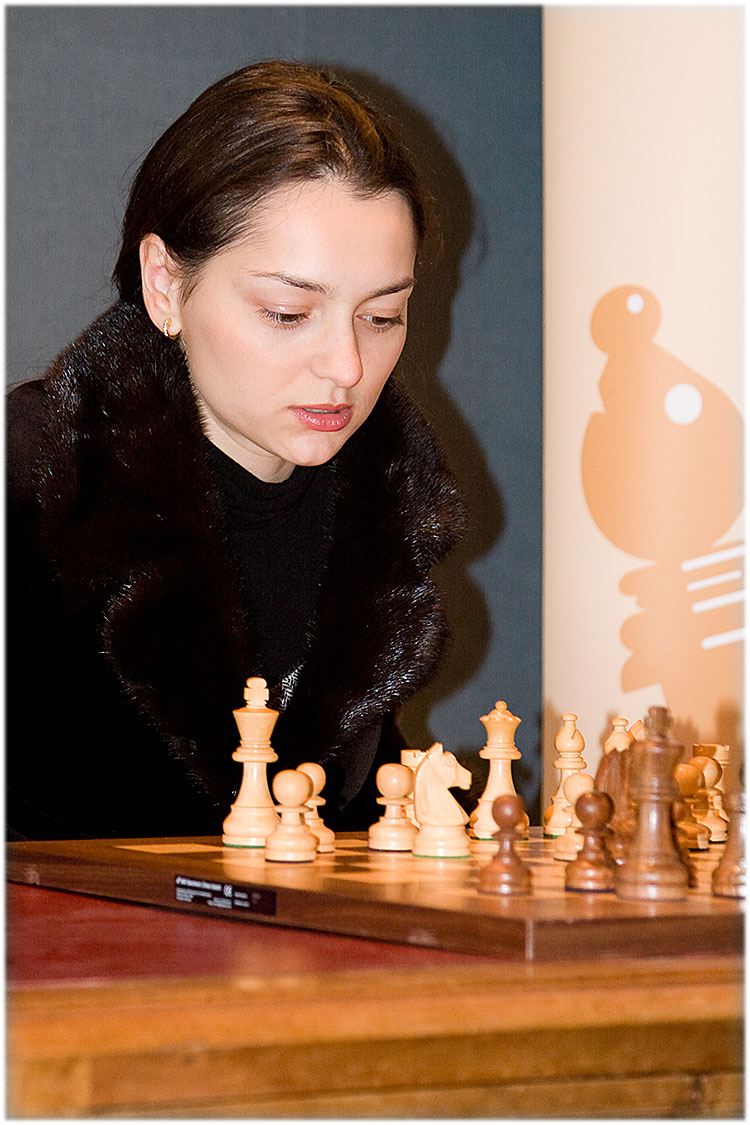
Women’s World Champion Alexandra Kosteniuk lives part of the year in Miami, USA and is planning to help promote chess in the USA in a positive way. I would like to thank her for allowing me to interview her.
I would also like to take this opportunity to announce a U.S. Chess Trust Fund raising Event in New York City with Alexandra Kosteniuk! As many of you may know, I am also the web editor for the U.S. Chess Trust’s website and am working closely with the Trust as I organize this fantastic fund-raising event.
Alexandra has been very generous to offer to donate her time to the U.S. Chess Trust by giving a 20-Board Simultaneous Exhibition. This event will be held in NYC on March 21, 2009 at the British International School of New York. This Invitational Event will exclusively benefit the U.S. Chess Trust. The U.S. Chess Trust is a charitable 501(c)(3) organization devoted to supporting the educational, cultural, and recreational value of the game of chess.
You can check the U.S. Chess Trust’s website at www.USChessTrust.org or stay tuned for more details!
An Interview with Alexandra Kosteniuk by WIM Beatriz Marinello
BEATRIZ: Hello Alexandra, it is a pleasure to have the opportunity to do this interview with you! You were crowned the 12th Women’s World Champion in chess history a little over four months ago. How does it feel to achieve such an accomplishment? This is chess history in the making, one that comes with a lot of responsibility. How has this affected your outlook? Do you feel a need to give back to the community and live up to a certain legacy, so to speak?

ALEXANDRA: Victory in the World Championship made me very happy and I felt so proud. It was definitely the happiest moment in my chess career. But, at the same time I had a hard time realizing that I had become the World Champion and entered all chess history books. But then little by little it sank in and I understood that life needs to go on. Even though it was the goal of my life, I needed to find more goals and more motivation for the game I love so much. I now feel very strongly that I have to do much more to promote and popularize chess in the world and attract both the media and as many kids as possible to our wonderful game.
BEATRIZ: Considering that you already achieved the World Championship title, how do you re-focus your goals as a chess player and in which direction do you see yourself going? Have you had an opportunity to reflect and determine which course to take next?

ALEXANDRA: After winning the World Championship I had a very tough schedule, I was playing non-stop almost all of the second part of 2008 and only now, after settling down in Miami, I have some time to rest and to think about my plans and goals for the future. I still enjoy playing in tournaments and, especially, studying chess with my coaches, since there is no limit to progress in chess and I love the constant search of perfection that chess allows. I’ll also definitely try to do a lot of promotional events for chess, such as giving lectures, simuls, interviews and also promote chess as an educator. I also want to spend more time with my family and especially with my daughter, since I was away from her for quite a long time while I was preparing and playing in the World Championship and being so far away from her, I missed her very much.
BEATRIZ: What are your thoughts about the future of women in chess? How do you feel we could attract more girls to the game?
ALEXANDRA: More and more girls are starting to play chess. I think in the last decade we’ve seen a constant increase in the number of girls playing chess. That’s why it’s important to speak not only about men Grandmasters and Male Champions but also about women who play chess successfully. Girls who are just starting to play chess have to have female role models they can relate to in order to see that they might also one day become a champion.
BEATRIZ: As you gain a broader audience and fan club, do you feel that being a fashion model, in a sense breaks the misconception that beauty and brains aren’t always the norm? Do you think this message has a positive impact in promoting chess to a much broader audience?

ALEXANDRA: Chess is a very ancient game and I believe it deserves much more attention than it has right now. Unfortunately, the modern world is more interested in nice-looking faces than in intellectual values. Role-models of today’s kids are mostly TV and movie stars, they follow their lives and try to look like them. Chess has now, unfairly in my opinion, a rather dull image that makes it hard to attract media and spectators and therefore sponsors. That’s why I feel I have to try to find ways to show the world that chess is a very cool game, it’s very useful for kids and what’s more if girls will play chess they will still be normal girls and at the same time they will have better chances to succeed in life.
BEATRIZ: You started playing chess at the age of 5. Tell us about your experience as a young chess player. Are there any specific events that led up to your passion for chess?

ALEXANDRA: My father was a hero to me. I valued his words very much and when he said that he would teach me how to play chess I was very excited and happy to start studying chess with him. After a while my father’s passion passed on to me and from that moment I started to study chess even more assiduously and with true passion.
BEATRIZ: Your father was an army officer who gave up his career to support you as a young chess player. Now, that you are a mother yourself what are your thoughts about parenting young, gifted and talented children?

ALEXANDRA: Actually, now I understand what a tremendous job my parents have done in order to educate their two daugthers. Now, being a mom, of course, I think all the time about my daughter’s education and I hope that she will be a happy child. I believe that every child is talented and the most important thing is to help these talents to develop. Childhood years, in my opinion, are the most important ones in life so I’ll try to do my best in educating my daughter. It’s quite a difficult task and I look forward to giving it all my heart.
BEATRIZ: How has motherhood affected you’re training? Are you still able to maintain the five hours per day training?
ALEXANDRA: I was very fortunate when my husband and my mom agreed to support me fully when I told them I wanted to try to prepare and play in the Women’s World Championship, last year in Nalchik, when my baby was not even 1 year old. Having a baby changes everything and it was very difficult for me to get back into shape and to start again after a break of close to a year. Now I’m very happy that all my efforts paid off. I still train now, but on a different schedule.

BEATRIZ: What do you feel are the positives and negatives as you work your life around a passion for chess, family, and a sometimes hectic schedule. Has traveling been more difficult considering the changes in your life? Is your family a part of your travel schedule?
ALEXANDRA: When you have a baby traveling is much harder. So now we try to travel not as often as we used to. I’m not so flexible as I was before and am planning all my future tournaments and events more carefully in order not to be far from my baby for too long. I prefer to take my baby with me to regular tournaments or to most events but of course she stays with my husband or my mom if I go to very important tournaments such the World Championship.
BEATRIZ: GM Xu Yuhua of China became the Women’s World Champion while she was four months pregnant, and you became a Women’s World Champion with a young child. It has become increasingly apparent that women can have it all – including a successful career in chess. You are a great example of this. Do you feel that biologically speaking , given that chess is a very competitive sport, men have an advantage over women?
ALEXANDRA: Technically, I believe men and women’s minds are equal. It’s men’s physical additional strength that gives them an edge in long games. In speed games the difference is less, as I have shown, by beating many male Grandmasters at Blitz. Also, chess requires a lot of studying, and men have an easier time to devote all their time to studying chess, without thinking of anything else, while women have many more responsibilities, such as taking care of the home and founding a family. I read recently a study, in which it was argued that the relatively lower results by women were due principally to the many fewer girls who start to play chess. If we had an equal number of boys and girls who started to play chess and continued til’ their 20’s, the difference in levels at the top would be almost insignificant.

BEATRIZ: What are your goals for the future? Are your planning to spend more time in the United States? Any plans to write more books?
ALEXANDRA: My first goal, is to give back to chess all that I can since it is chess that has given me all that I have. I will promote chess all over the world, and I will do so both on the web with my upcoming online academy, with my DVD’s, and personally in my chess academy. I am on the way to becoming a permanent U.S. Resident and plan to make Miami my home. I feel Florida is the best place for my daughter to grow up and for me to have my base.
BEATRIZ: In Russia chess is being taught as part of the school curriculum. I personally believe that the future of chess lies in integrating chess as part of our culture, the best way to approach this is through chess in the schools. What are your comments and thoughts about chess in the schools? Do you plan on teaching your own children at an early age?
ALEXANDRA: You are absolutely right, chess in schools is the best way to go. The educational value of chess is totally clear, it helps kids succeed in life. I will definitely teach my daughter to play chess, she’s not even two yet, and she knows what pawns are, as well as knights, chess pieces are pretty much her favorite toys, she sees her mom playing with them all day, so it must be really fun! I’m looking forward to when she’s 3 or 4 so I can start showing her the beauty of our wonderful game.
BEATRIZ: That is wonderful. It is great to see such a well-rounded, intelligent young woman with such a postive outlook, such a passion for chess and a desire to promote and do positive things with the game we all love!
Well, Alexandra, let’s wrap this interview up. It has been a great pleasure talking with you. Thank you for taking the time. We look forward to seeing much more of you and wish you and your family the very best.
For more information about World Champion Alexandra Kosteniuk – Please visit Alexandra’s website.
- Website: www.Kosteniuk.com
- Her podcast: www.ChessisCool.com
- Video podcast at www.ChessKillerTips.com
- You can also find more on her YouTube channel at www.youtube.com/chessqueen
Don’t forget to check the U.S. Chess Trust’s website for more information on the U.S. Chess Trust’s Fundraising Event with Alexandra Kosteniuk!
About the U.S. Chess Trust
The U.S. Chess Trust is an independent 501(c)(3), non-profit organization.
Created in 1967, the Trust was organized to promote, stimulate and encourage the study and play of the game of chess as a means of intellectual development. The Trust uses its resources for charitable purposes, including social, educational, scientific, historical endeavors. Our Trustees act without compensation, and are dedicated to the U.S. Chess Trust’s mission.
The U.S. Chess Trust’s focus is an outgrowth of similar activities formerly carried out by the U.S. Chess Federation . We promote and support chess in the community through our programs, and by providing resources that help support our mission.
In addition, we also actively support charities conducted by the USCF and other chess organizations.
To learn more about how we are helping make a difference in the chess community, please visit our Programs/Resources section.
It is no wonder, that more and more scientific studies have confirmed that children who are taught chess, in addition to their regular courses, do better in school. Studies report that chess helps develop valuable reading and decision-making skills, and improves students’ ability to concentrate.
These are only a few reasons why the U.S. Chess Trust takes an active role in supporting chess education programs across the nation. And your donations help make that possible!
Visit their website at www.USChessTrust.org.
How Does Chess Benefit Children?
January 23, 2009 by Support
Filed under Featured, Programs, Teachers/Coaches
CHESS IN THE SCHOOLS

How Does Chess Benefit Children?
- The game of chess helps young people learn to concentrate, think logically, overcome obstacles, spot patterns and categorize information.
- It helps with the development of problem-solving skills, planning, patience, focus of thought and self-discipline.
- Chess is a competitive activity, but , good sportsmanship and fair play are taught as essential elements of the game.
- Chess is a one-against-one activity, however, teamwork is also an important element. This element comes into play when Club members must practice and work on problems together.
- Everyone has a chance to contribute to the team in tournament play as chess clubs may enter as many players as they wish and various skill-levels or age-based sections are generally available.
- A scholastic chess club provides a challenge for students while helping build confidence and self-esteem. It offers a combination of educational and social activity.
Frequently Asked Questions:
Do I have to be a chess player to start a chess club?
No, you do not need advanced chess skills to organize a club. There are videos and simple instructional booklets that anyone can use to learn the game. You can almost always find a parent, older student or chess player in the community to help the group get started. You will want to read through a rule book and learn the basic elements of the game, but you do not have to be a skilled player yourself. Many clubs benefit from having non-playing organizers to support chess instructors.
Do I have to be a teacher to start a chess club?
No. A chess club may be sponsored by a parent or interested chess player in the community. Frequently, a parent and teacher will jointly sponsor a club, because being a teacher might make it easier to gain permission to use school facilities for meetings or tournaments.It is important to work with school administrators for recognition of chess clubs as a school function, part of the schools extracurricular program. While this may take some time, achievement of this goal will benefit both the chess club and the school.
How much time does a Chess club take?
It depends on how much time you are willing to invest. It could be as little as an hour a week, but it will vary depending on the number of students involved and their ages. Most clubs meet regularly for one to two hours per week. These meetings may be after school, in the evening or on weekends.
How much money is involved in starting a club?
You can start a scholastic chess program for very little money – substantially less than the cost of just one football uniform. All that is required are a few chess sets.
If local funding is not available, contact the U.S. Chess Trust for assistance on getting free chess sets and US Chess Federation memberships.
You may send an E-mail with your Questions and/or Requests to info@chesseducators.com , or, you may Post Your Comments and Questions on our Blog !
To Post a Comment – just Click the Comments balloon at the top of the Blog Post in question, Leave a Reply, and Click Submit !
Your comment will be posted the same day, and responses follow shortly, it’s that simple !
Tips for Parents
TIPS FOR PARENTS

Tips On How to Tell if Your Child is Ready for Tournament Play:
- Your child already participates in a Chess Class and/or has a brother or sister experienced in tournament play.
- Your child shows an interest in participating in tournament play.
- If none of the above apply, but, your child shows an exceptional talent with chess and expresses interest in tournament play.
- Prior to participating in a chess tournament make sure that your child knows all the basic rules of the game, including the special moves, such as Pawn Promotion, en passant and Castles.
Novice Players – The Most Important Aspects of Tournament Play:
- Encouragement and Support: The first time your child plays in a tournament, make sure that he/she knows that they may lose most of the games if not all. This is natural since the other participants may be more experienced. Introduce the concept of playing chess in tournaments as a fun and enriching experience. Remember, practice makes perfect or we can say practice makes masters. The most important thing is to encourage and actively support your child in their interest to play chess.
- Notation: Writing down the moves is essential for your childs progress in chess. The main learning tool is based on studying and reviewing our games. In chess we learn from our mistakes, and try not to repeat them again.Usually for grades K-2, notation is strongly recommended, but, for grades 3-12 it’s a requirement. Therefore, before registering your child in a chess tournament it would be to their advantage if they learned notation.
- Touch Move and Piece Connection: If you intentionally touch your piece, you must move it if there is a legal way to do this. If you intentionally touch your opponents piece, you must capture that piece if possible. Pieces that are accidentally knocked over, brushed with a palm as you reach for another piece, hit with an elbow, or otherwise inadvertently touched do not need to be moved. If you need to adjust a piece because it is not aligned correctly on the board, you must say, adjust before you touch the piece. Players are not required to move the piece that they have adjusted in this way.
There are other rules for tournament play. In scholastic events, usually the Tournament Director will go over the rules before the start of the event.If you have any questions or comments you may post them on this site – it is a fast and easy way to get a quick response!